Why Georgetown?
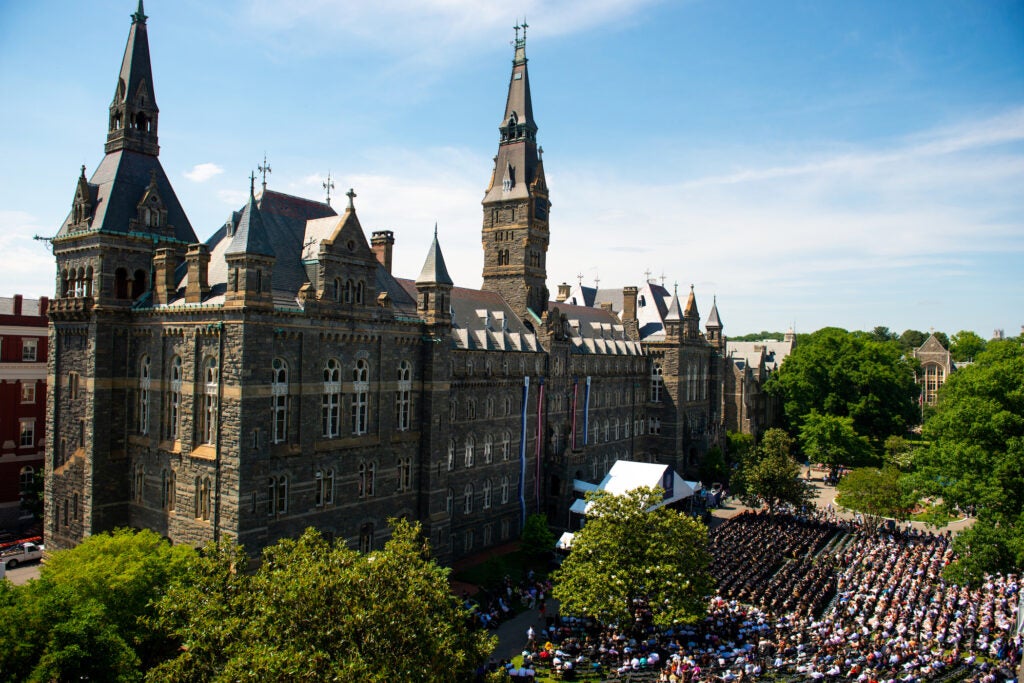
As the oldest catholic university in the United States, Georgetown University has been an integral part of the fabric of Washington, D.C for over two centuries and is a locus for global health. Students at Georgetown have access to two campuses – the iconic Hilltop campus and the Capitol campus just blocks from the U.S. Capitol.
Our faculty offer diverse expertise and experience from the arts and sciences, law and policy, and health and medicine. There are numerous opportunities to learn from and engage with renowned speakers, and government and private sector leaders.
There is a strong institutional commitment to global health through the President’s Global Health Initiative, the Global Health Institute, and various centers for global health within the Schools of Medicine, Health, Policy, and Law. These entities offer an array of options and avenues through which students can get involved in infectious disease, health security, and global health activities.
Education Guided by Jesuit Values
“You are more than a mind. You are an individual with unique talents, dreams, and passions. Our long-held Jesuit tradition of cura personalis means a profound care and responsibility for one another, attentive to each person’s circumstances and concerns and gifts.”
One of the central tenets of Georgetown’s educational approach is cura personalis, a Latin phrase meaning “care of the whole person.” Its idea is rooted in the Jesuit tradition and borne out in all aspects of the Georgetown University experience.
The university is committed not just to your academic achievement but also to your mental and physical health, spiritual growth, and development as a citizen of the world.
All of our faculty, staff, and other representatives you meet will consider you as a whole person, which we believe fosters a healthy and vibrant university community.
Unique Interdisciplinary Programs
There are very few college programs that focus on infectious disease within public/global health; fewer that incorporate a comprehensive understanding of the underlying science; fewer still that incorporate infectious disease-tailored health policy; and even fewer that incorporate advanced data science at the master’s level. Finding solutions to some of the most complex public health issues of our time will require an integrative understanding of both hard science and science policy, and modern data analytics and tools.
There are programs that will provide one or another of the competencies above, but the Georgetown program provides a solid, interdisciplinary background in all of them.
Global Infectious Disease program graduates have many career options following graduation. And our graduates get hired: Nearly all of our 2025 M.S. in Global Infectious Disease graduates found employment within six months of graduation.
Meaningful Opportunities to Do ‘Big Things’
- Help prevent the next pandemic: Graduates are equipped to work at a myriad of organizations to detect pandemic-level threat agents, conduct research into these entities, and develop and manage Health Emergency Preparedness and Response Systems.
- Be part of the next disease eradication story: Only two diseases have been eradicated from the human experience, and both are infectious diseases. Graduates possess the competencies to work with public, multi-lateral and private organizations on eradication programs such as BMGF and GAVI to achieve the eradication of additional diseases such as polio and Guinea worm.
- Contribute to eliminating disease in various regions of the world: Different countries and regions are actively working with international agencies to eliminate various diseases from within their borders. Diseases such as malaria, hepatitis, trypanosomiasis, trachoma, lymphatic filariasis, visceral leishmaniasis, and other neglected tropical diseases are areas our graduates are prepared to support.
- Develop next generation surveillance systems: Advances in information technology have informed advancements in infectious disease surveillance systems. Our graduates are ready to work with these tools and participate in research towards developing next generation systems.
Study in the Heart of D.C. at Our Capitol Campus
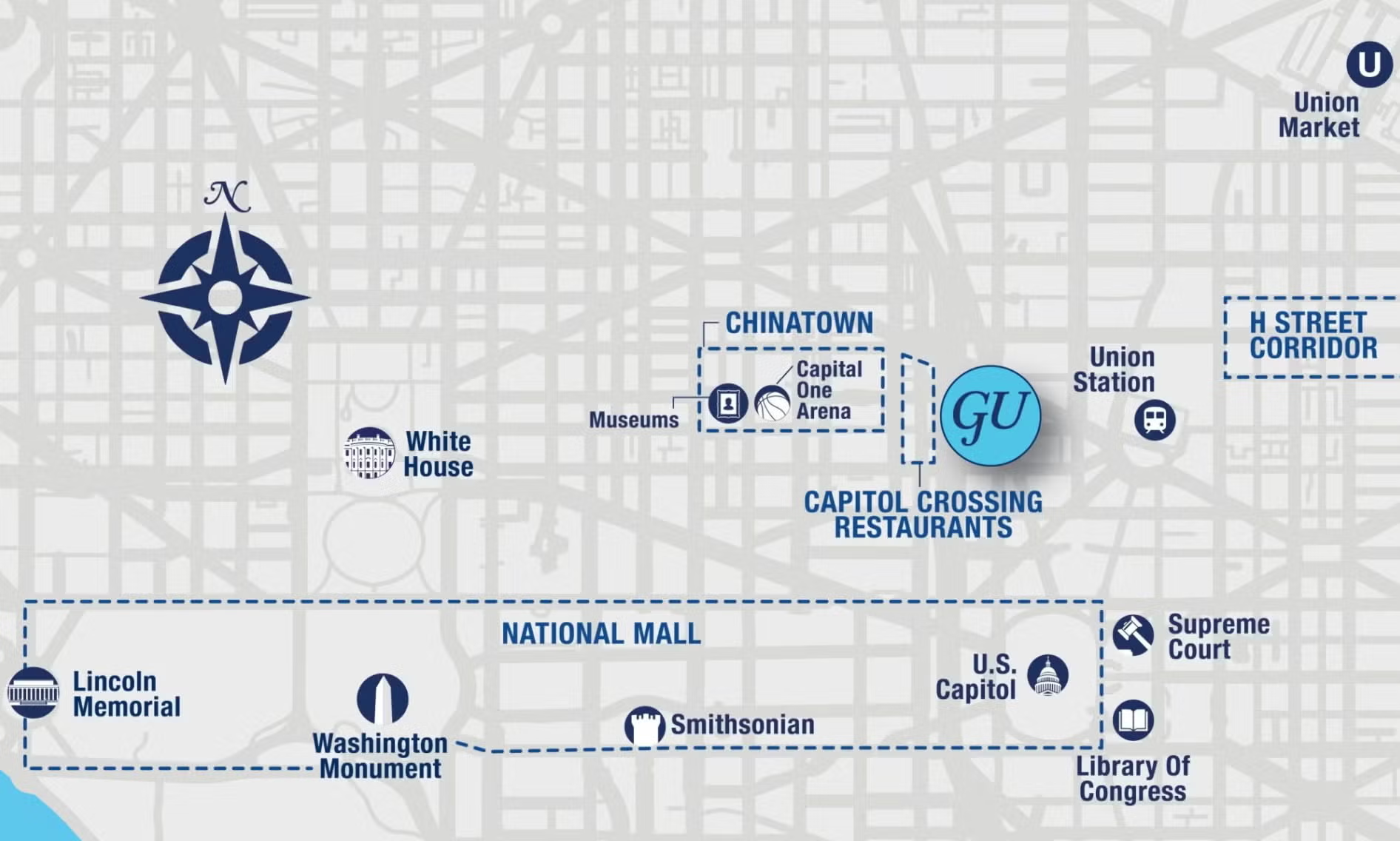
By Fall 2026, the School of Health’s graduate programs will begin to be integrated in the university’s Capitol Campus where students will have access to its resources. Steps from the nation’s center of influence, the campus is at the heart of the most important conversations taking place today. It is a place to listen, learn, exchange ideas and contribute to solutions for society’s challenges.
Learn about the Capitol Campus